
Drainage Solutions Based on Data, Not Guesswork
Drainage in Bulverde for properties dealing with standing water, caliche hardpan, and flash flood runoff
Flash flood season and caliche hardpan make drainage failure a real threat to Hill Country properties. Standing water and erosion aren't cosmetic problems—they damage foundations, kill landscaping, and turn yards into mud pits during heavy rain events. Johnson Ranch Landscape and Lawnscape designs and installs French drains, grading corrections, slope adjustments, and drainage systems for residential and commercial properties across the Hill Country and San Antonio area. Every drainage project starts with drone photogrammetry and Moser slope measurement—site conditions are mapped before any solution is designed, so the system actually works instead of just moving water from one problem area to another.
Caliche acts like concrete when dry but turns slick when saturated, which means water doesn't absorb into the ground the way it does in sandy or loamy soil. That's why drainage solutions have to account for where water runs, where it pools, and where it can be routed without creating new erosion or flooding issues. French drains are installed in side yards, back yards, and along foundations based on site-specific data—not a template layout that assumes every property drains the same way. Grading and leveling corrections redirect surface water before it reaches problem areas, and all drainage systems are designed with a destination in mind so runoff ends up in a safe discharge point instead of your neighbor's yard.
Schedule a property evaluation to identify drainage patterns and problem areas before designing a solution.
Why Drainage Diagnosis Happens Before Any Digging Starts
Drone mapping shows how water moves across the property during rain events, and the Moser slope tool provides precise elevation data so grading corrections are accurate instead of eyeballed. That combination reveals where the low spots are, where runoff originates, and what path water takes when it can't absorb into caliche hardpan. French drain placement, depth, and routing are determined by that data—not by installing the same trench in the same spot on every lot regardless of conditions.
Once the drainage system is installed, you'll notice that standing water no longer pools near the foundation after storms, that side yards and back yards dry out instead of staying saturated for days, and that erosion stops carving channels through landscaping and hardscape. French drains move water below the surface to a discharge point that won't cause new problems, and grading corrections redirect surface flow before it reaches areas where it used to collect. Johnson Ranch Landscape and Lawnscape has spent 30 years learning how Hill Country soil, lot position, and runoff patterns interact—that knowledge determines whether a drainage system works or just shifts the problem somewhere else.
Drainage systems are designed based on soil type, lot slope, and where the water needs to go. Some properties need French drains routed to the street, others to a dry creek bed or natural drainage swale, and some require multiple discharge points because of how the lot is positioned relative to neighboring properties. Side-yard and back-yard drainage routing often involves working around existing landscaping, hardscape, and utility lines, which adds complexity but prevents the need to tear up finished areas later.
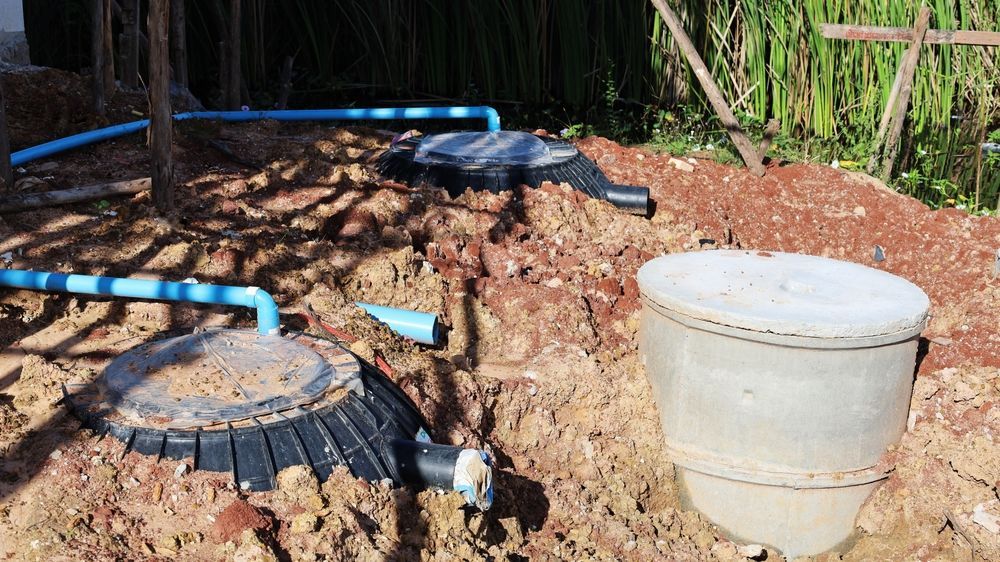
Common Questions About Drainage System Installation
Property owners usually want to know how drainage systems are designed, how they work in Hill Country conditions, and what determines where water gets routed.
How does drone photogrammetry help with drainage planning in Bulverde?
Drone mapping captures topography and elevation data across the entire property, which shows where water naturally flows and where it pools during rain events. That information guides French drain placement, grading corrections, and discharge routing so the system addresses the actual problem instead of guessing.
Why doesn't water absorb into the ground on Hill Country properties the way it does elsewhere?
Caliche hardpan is a natural clay-limestone mix that hardens into an impermeable layer just below the surface. When saturated, it sheds water instead of absorbing it, which is why drainage systems are required to move runoff instead of relying on natural percolation.
What's the difference between French drains and grading corrections for managing standing water?
French drains move water below the surface through perforated pipe surrounded by gravel, while grading corrections reshape the surface to redirect water before it reaches problem areas. Most effective drainage systems use both methods depending on site conditions.
Where does the water go once it's collected by a French drain?
Discharge points are determined by lot position, elevation, and local regulations—options include routing to the street, a dry creek bed, a natural drainage swale, or an on-property retention area. The goal is to move water away from structures without creating flooding or erosion issues downstream.
How long does a properly installed drainage system last in South Texas conditions?
French drains and grading corrections designed with correct slope, proper materials, and accurate discharge routing typically function for decades without major issues. Systems installed without site-specific data often fail within a few years because they don't account for how water actually moves across the property.
Johnson Ranch Landscape and Lawnscape has a 4.9-star Google rating built on 30 years of Hill Country drainage work—systems designed for homeowners and commercial clients who need solutions based on data, not guesswork. Request a site assessment to review your property's drainage patterns and soil conditions before finalizing system design.