
Concrete That Handles Texas Heat Cycling
Stamped Concrete & Patios in Bulverde for sloped Hill Country lots where drainage and expansion control are critical
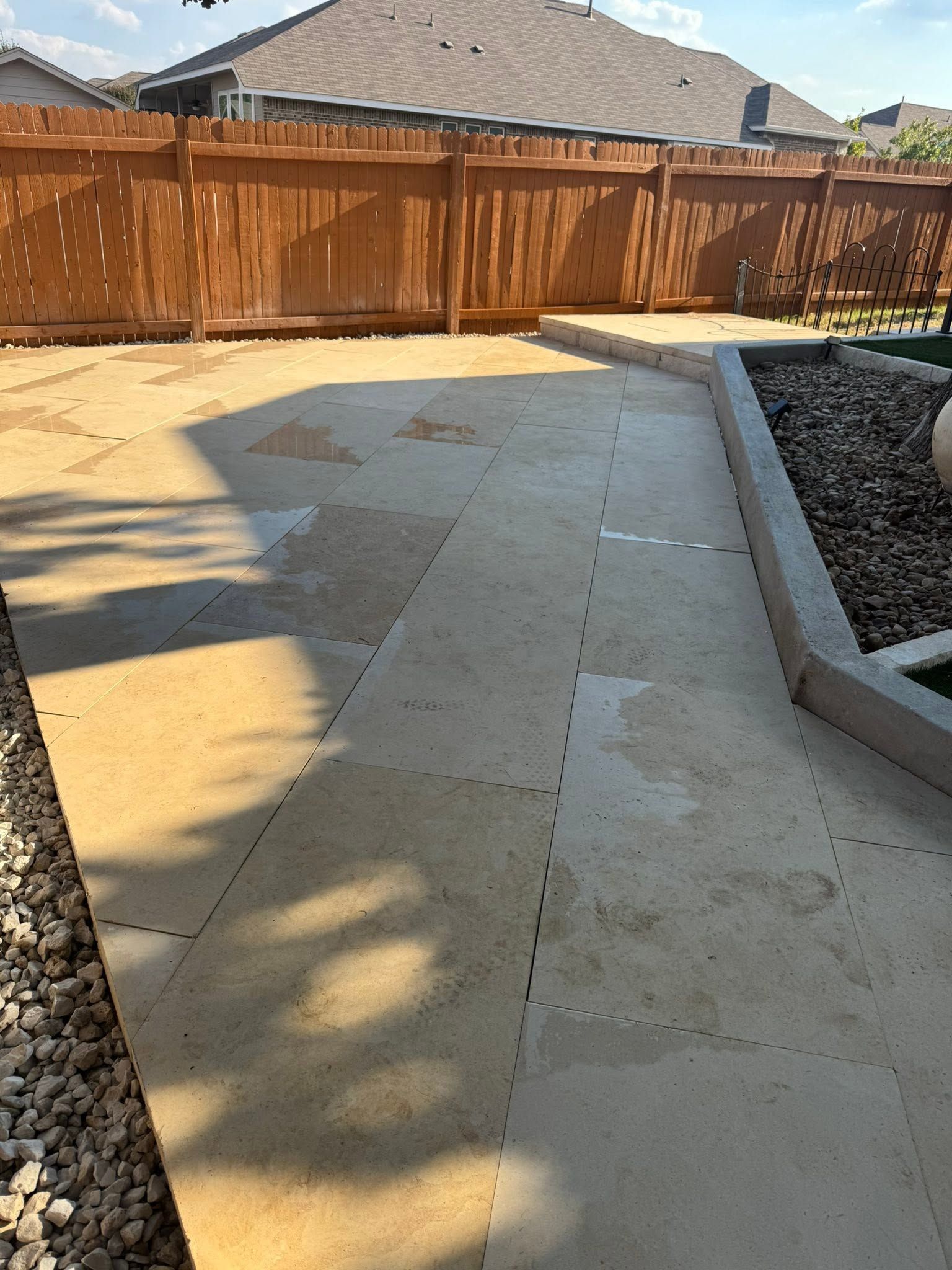
Extreme Texas heat causes concrete to expand and contract daily, and without proper control joint placement, patios crack within the first year as slabs shift over uneven limestone bedrock. Spring Branch and Smithson Valley sloped lots add another layer of complexity—pours must compensate for grade to prevent water pooling against foundations and structural settling where fill wasn't properly compacted. Johnson Ranch Landscape and Lawnscape LLC installs stamped concrete patios, walkways, and driveway extensions across Bulverde with control joint planning designed for Texas heat cycles and drainage integration handled in the same project scope, not as an afterthought when problems appear.
Pours include stamped decorative finishes, plain concrete patios, small retaining walls, and hardscape extensions, with slope-compensating techniques applied on properties where existing grade requires cut-and-fill preparation. Drainage solutions like French drains are evaluated and installed alongside concrete work when site assessment reveals runoff patterns that would undermine the pour.
Schedule a free estimate, including drone-assisted drainage diagnostics if your property has slope or runoff concerns.
What Concrete Work Paired with Drainage Expertise Accomplishes
Control joints are placed at calculated intervals to allow controlled cracking as concrete expands and contracts with temperature swings—this prevents random crack patterns that develop when slabs are poured without expansion planning. Slope is assessed before the pour to ensure water moves away from structures and doesn't pool on the patio surface, a common failure on Hill Country lots where natural grade wasn't corrected during installation. Base preparation includes compaction testing on fill areas and limestone shelf leveling where bedrock sits inches below the surface.
After installation, you'll see a patio surface that sheds water correctly, control joints placed where cracks would naturally occur rather than random fractures across the slab, and stamped patterns that hold detail without surface spalling from freeze-thaw cycles. Drainage integration means runoff is directed to French drains or graded swales instead of pooling under the slab and causing voids that lead to settling.
This approach combines concrete installation with an understanding of Hill Country soil movement, a differentiator that matters on properties where limestone bedrock, clay pockets, and seasonal moisture shifts affect long-term slab stability. You're working with a contractor who has poured concrete across the region for 30 years, not a crew treating every site like flat, stable ground.
What Property Owners Usually Ask
Clients across Bulverde and Cross Mountain typically want to know how control joints work, what stamped concrete involves, and how drainage is addressed before committing to a patio pour.
Why are control joints necessary in Texas concrete pours?
Concrete expands and contracts with temperature changes, and Texas heat cycling creates significant movement—control joints provide planned weak points where the slab can crack in straight, controlled lines instead of random fractures across the surface.
What does stamped concrete installation involve compared to plain pours?
Stamped concrete uses texture mats pressed into the surface while the concrete is still workable, creating patterns that mimic stone, brick, or tile—color is added through integral pigment or surface staining, and the process requires timing and technique to achieve clean pattern detail.
How do sloped lots in the Hill Country affect patio installation?
Sloped lots require cut-and-fill grading to create level patio surfaces, and drainage must be planned to direct water away from the structure and off the patio without erosion or pooling—improper slope compensation leads to settling and water intrusion over time.
When should French drains be installed alongside a concrete patio?
French drains are recommended when site assessment reveals runoff patterns that would pool under or around the patio, particularly on sloped properties where water naturally flows toward the structure during heavy rain.
How long does stamped concrete last in Bulverde's climate?
Properly installed stamped concrete with correct control joints and drainage integration lasts decades in Hill Country conditions, though surface sealant may need reapplication every few years to maintain color and protect against moisture penetration.
Johnson Ranch Landscape and Lawnscape LLC has installed concrete across Hill Country properties for three decades, with a veteran-led crew that understands the relationship between pours, drainage, and soil conditions. Request a free estimate to review your site's grade, drainage, and concrete options.