
Pathways Built for Hill Country Terrain
Walkways in Bulverde for properties with uneven limestone shelves and natural grade changes
Rocky Hill Country terrain often requires cut-and-fill grading before walkway installation, especially on Bulverde and Cross Mountain properties where uneven limestone shelves create natural obstacles along logical pathway routes. You're looking at a site-specific challenge—material selection, drainage planning, and slope compensation all depend on reading the land first, not defaulting to a single product regardless of conditions. Johnson Ranch Landscape and Lawnscape LLC installs custom stone and concrete walkways across the Hill Country with material recommendations matched to your specific terrain, drainage patterns, and aesthetic goals, an approach grounded in 30 years of navigating the region's unique topography.
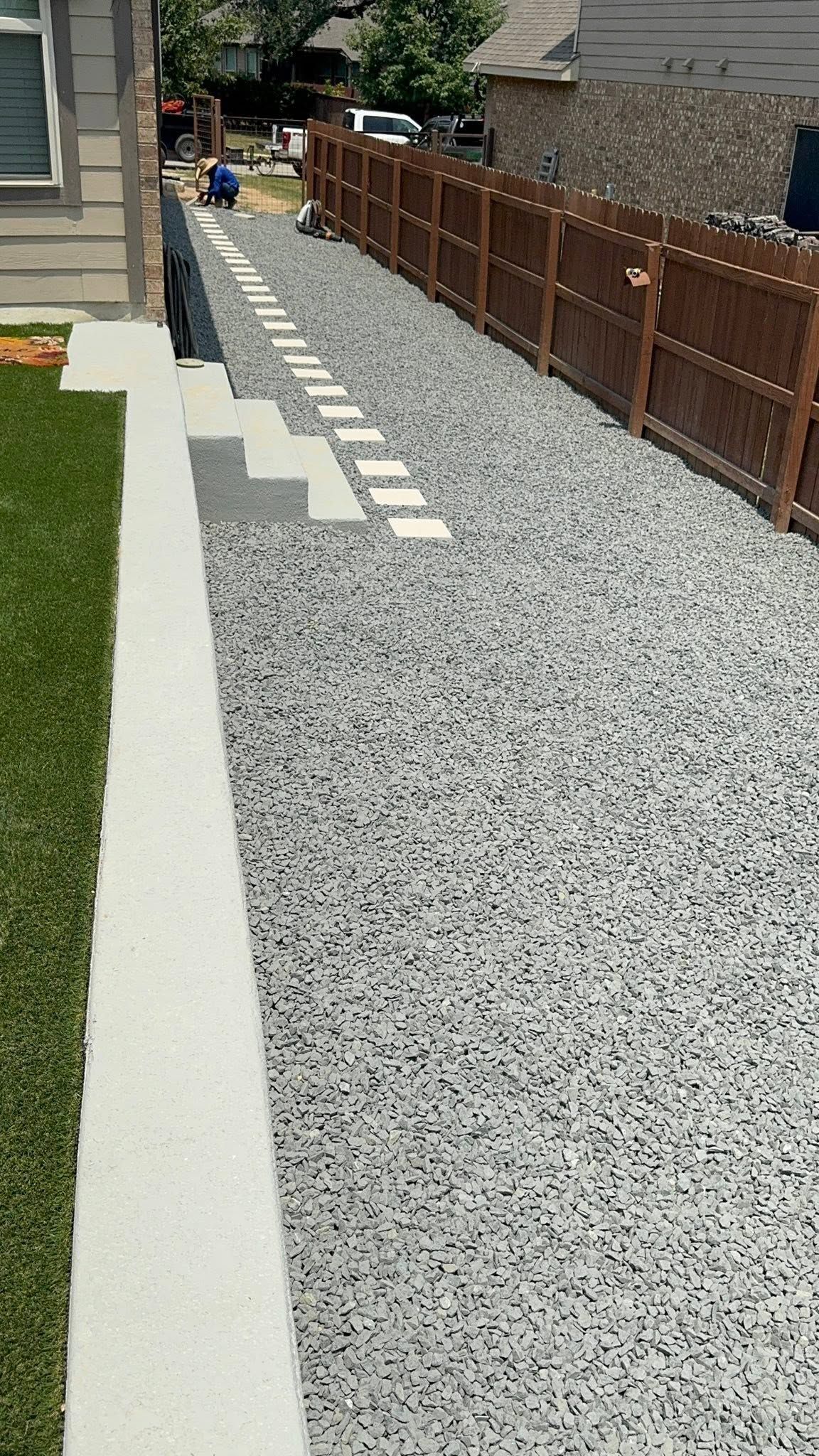
Material options include limestone, flagstone, and concrete, with slope and drainage assessment completed before installation begins. Walkways integrate with existing hardscape and landscape design, maintaining visual continuity while addressing functional requirements like water runoff and grade transitions that affect long-term stability.
Request a free estimate to review pathway routing and material options based on your property's grade and drainage conditions.
Why Material Selection Depends on Site Drainage and Slope
Limestone and flagstone allow water to percolate between joints, making them ideal for pathways crossing areas with poor drainage or where runoff concentrates during storms. Concrete provides a continuous surface better suited to level grades and high-traffic areas, but it requires careful slope planning to prevent water pooling and surface erosion on properties with natural grade changes. Material choice also affects how the walkway responds to underlying limestone movement—rigid concrete cracks when bedrock shifts, while stone set in gravel or sand flexes with minor ground movement without visible failure.
After installation, you'll notice pathways that follow natural terrain without awkward grade jumps, drainage that directs water away from the walking surface rather than pooling in low spots, and material that complements your existing hardscape instead of introducing visual disconnect. Stone walkways develop a settled, permanent appearance as joints fill naturally, while concrete pathways offer clean edges and consistent width across the entire route.
Cut-and-fill grading is handled where limestone shelves would create trip hazards or where natural slope exceeds safe walking grades, and base preparation ensures long-term stability even on properties where soil depth varies dramatically over short distances. This locally owned crew has been installing walkways on Hill Country grades for three decades, working with terrain conditions that require more than flat-ground installation techniques.
Questions Before Starting Your Pathway Project
Homeowners frequently ask about material durability, grading requirements, and how walkway installation accounts for Hill Country's rocky soil before moving forward with projects.
How do you determine which material works best for a specific pathway route?
Material selection depends on the pathway's slope, drainage patterns, traffic level, and how it connects to existing hardscape—flagstone handles irregular grades and drainage better, while concrete works well for level, high-traffic routes that need consistent width.
What grading work is required before installing a walkway on sloped terrain?
Sloped routes often require cut-and-fill grading to create safe walking grades, especially where limestone shelves create sudden elevation changes—base preparation includes leveling high spots and filling low areas to achieve stable, even footing.
Why does drainage matter for walkway installation in Bulverde?
Hill Country properties experience concentrated runoff during heavy rain, and pathways installed without drainage planning can channel water toward foundations or develop erosion channels that undermine the walking surface over time.
How long does stone versus concrete last on Hill Country properties?
Both materials last decades when properly installed, but stone set in gravel or sand flexes with minor ground movement and allows easier individual piece replacement, while concrete provides a permanent surface that may crack if underlying limestone shifts significantly.
What does integration with existing hardscape involve?
Walkway installation accounts for connections to patios, driveways, and other hardscape features, matching material type, color, and grade transitions to maintain visual continuity and functional flow across your property's outdoor spaces.
Johnson Ranch Landscape and Lawnscape LLC has installed pathways across Spring Branch, Smithson Valley, and Johnson Ranch for 30 years, with a veteran-led team that reads terrain before recommending materials. Arrange a free estimate to walk your property and discuss pathway routing and material options.